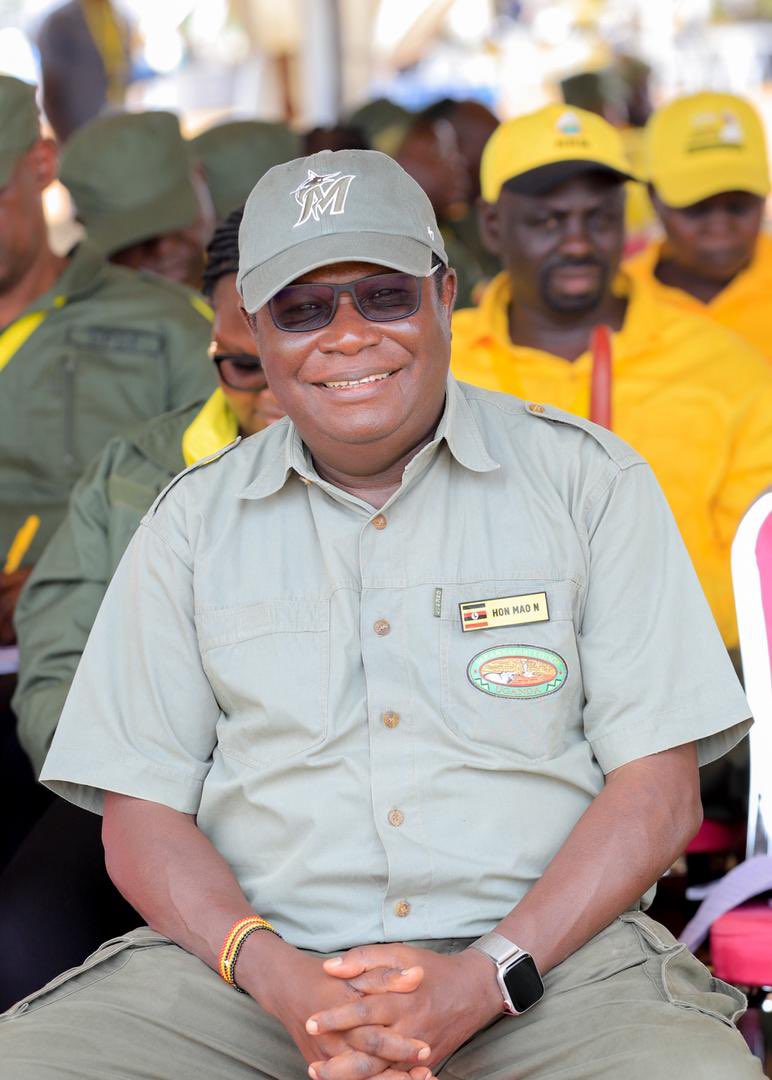
For days, the talk around the National Leadership Institute was not about the retreat theme or the 450 incoming MPs in attendance. It was about one name that appeared, disappeared, then reappeared on the program: Norbert Mao.
The Democratic Party President General and Minister of Justice was first expected to address the incoming MPs and leaders in attendance, in Kyankwanzi, last week. Then, without explanation, his name vanished from the speaking list circulated among members. The sudden absence sparked whispers in the corridors. On that very day, Speaker Anita Among had weighed in, describing Mao as a “guest who shouldn’t come to the bedroom.” The metaphor was not lost on anyone. In Uganda’s political language, the “bedroom” is where family matters are settled. Guests are for the sitting room.
Mao did not stay quiet. He insisted he was invited by President Yoweri Museveni himself. As proof, he pointed to a formal letter from the NRM Secretary General’s office dated 27th March, 2026. The letter, addressed to him as “Senior Comrade,” confirmed a directive from Museveni that Mao attend the retreat running from 7th to 15th April, 2026. It even listed the theme: “Aligning the NRM leadership towards protecting the gains and making the qualitative leap to a higher middle-income status society.”
Then yesterday afternoon, the ground shifted again. Copies of the NRM–DP Cooperation Agreement were distributed to the MP-elects at the training. The document, signed in 2022, lays out how the two parties handle confidential government material, political consultation, and public comment. It is the legal backbone of a relationship that has been both praised as mature politics and condemned as a betrayal of opposition ideals.
With the agreement now in the hands of every incoming NRM legislator, an internal report indicates Mao is indeed scheduled to present on it. The session will reportedly be held in the presence of President Museveni.
So what changed between the bedroom comment and the distribution of the agreement? That is the question dominating Kyankwanzi.
Three things are happening at once, and none of them are accidental.
First, this is a test of the 2022 agreement itself. The document creates rules for sharing Cabinet papers with DP and for public communication. By putting it before all new NRM MPs, the party leadership is formalizing Mao’s role beyond a mere ministerial appointment. He is being positioned as a political educator to the NRM base. You do not hand out contracts unless you expect the parties to keep working together.
Second, it exposes the fault lines inside the NRM. The Speaker’s “bedroom” remark reflects a view held by many long-serving NRM cadres: cooperation is fine, but cohabitation has limits. Mao in Cabinet is tolerable. Mao explaining party doctrine to NRM MPs-elect is something else. It challenges the idea of who belongs in the family. The President’s invitation overruling that sentiment sends its own message about where final authority lies.
Third, it forces Mao to define his next act. Since 2022, he has walked a tightrope. To NRM, he must prove he adds value beyond his own vote. To DP, he must show the cooperation yields more than a ministerial car. A confident, substantive presentation at Kyankwanzi, backed by the very agreement he signed, helps the first audience. But every word will be weighed by his own party’s skeptics who saw the “bedroom” comment as humiliation.
The letter Mao produced matters because Uganda’s politics runs on invitations. Being summoned by the President is different from gatecrashing. If Mao speaks, it will be because Museveni wants the NRM-DP deal owned by the entire incoming Parliament, not just State House and a few ministers. That is how you institutionalize a partnership past the two principals.
The risk for all sides is misreading the room. If NRM MPs treat Mao as a lecturer to be endured, the cooperation looks hollow. If Mao uses the platform to renegotiate his standing in real time, he confirms the Speaker’s fear that the guest wants the bedroom. If the President is absent from the session, it signals the deal is personal, not structural.
Kyankwanzi has always been where the NRM sets its tone for the next five years. By putting the NRM-DP Agreement on the timetable and Mao at the podium, the tone for 2026-2031 is clear: the line between ruling party and cooperating opposition will be thinner, and the arguments about it will be louder.
The bedroom door, it seems, is open. The question is whether everyone inside is comfortable with the new seating arrangement.