
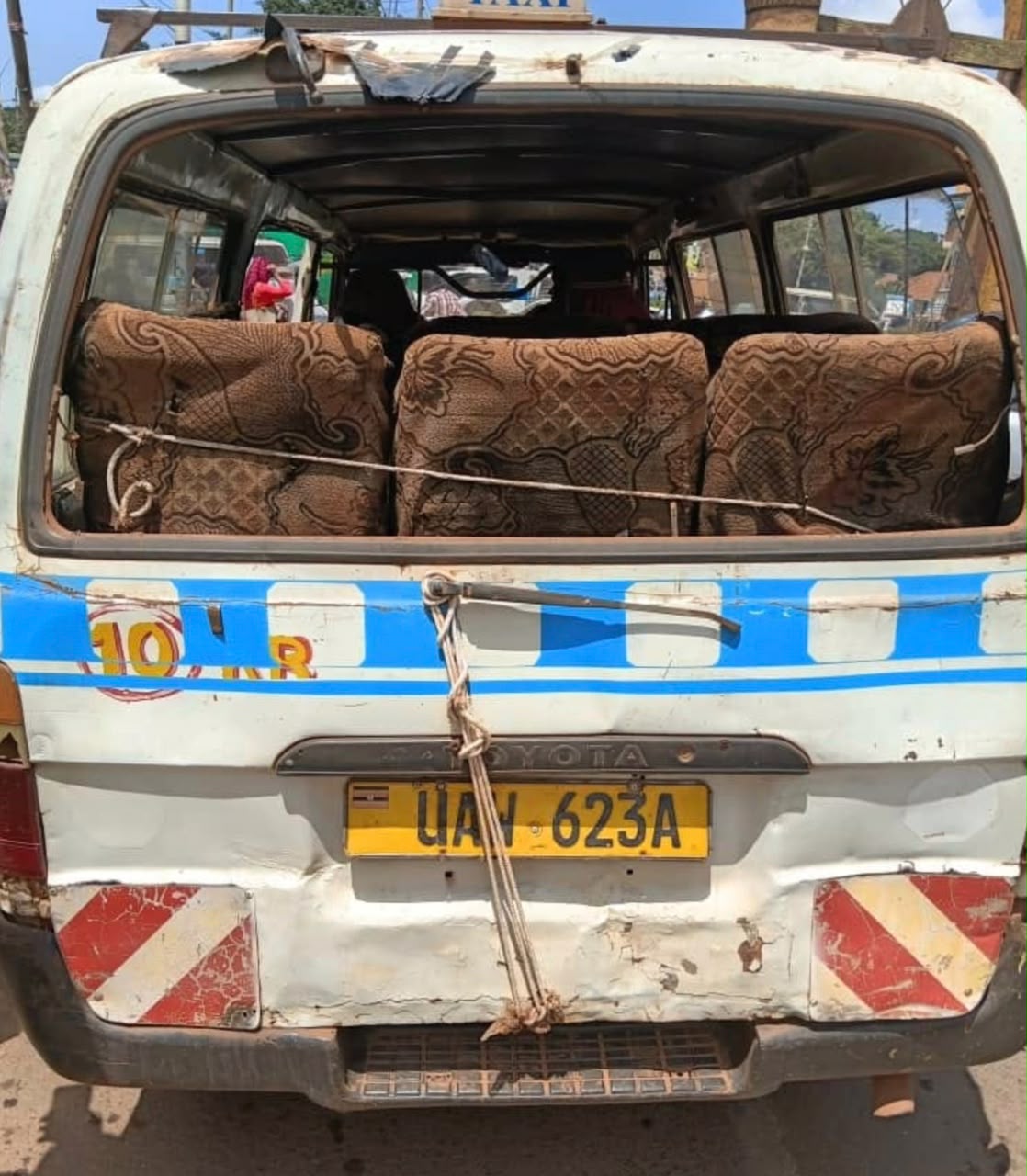
KAMPALA — From Monday, if your taxi is in bad shape, it’s not going anywhere.
Hon. Fred Byamukama, Minister of Works and Transport, has ordered Uganda Police to start a 100-day operation targeting commuter taxis operating in Dangerous Mechanical Condition in Greater Kampala. The directive specifically targets the old 14-seater “Ganyegenya.”
Taxi owners and operators have been given until Monday to pull unroadworthy vehicles off the road. After that, expect roadblocks, impounding, and prosecution.
“Our roads must not be death traps,” the minister said. “Public transport must be safe. We cannot continue losing lives because of vehicles that should not be on the road.”
What Commuters Are Saying
For the teacher in Kyanja: You’ve sat in a taxi where the door only opens from outside. Where rain comes in through broken windows. Where the exhaust chokes you in traffic.
This is for you. No one should pay fare to risk their life.
For the driver: You’ve been waiting for this. Some “Ganyegenya” owners undercut fares, overload, and give the whole industry a bad name. If enforcement is fair, good vehicles will finally compete on a level ground.
The Problem: No Rules Written Down
Here is where it gets messy.
The Ministry has not published any official checklist of what counts as “Dangerous Mechanical Condition.”
There is no public document that says: this much smoke is a fail. This is the standard for brakes. This is how seats should be. These are the tests for lights and tires.
Without that, the decision is left to the officer at the roadblock.
In Uganda, when policy is left to discretion, it rarely ends well. It becomes about who you know. About “negotiations.” About good cars being grounded and bad ones being let through.
Drivers are already asking: “How do I know if my taxi will pass? What exactly do I need to fix?”
Basic indicators are not hard. They could be published today:
1. Exhaust emissions – no excessive smoke
2. Doors and Windows – must open, close and lock
3. Seats – clean, firm, properly covered
4. Brakes, tires, lights, wipers – must work
Put it in every taxi park. Put it on radio. Let a driver self-inspect before Police do it for him.
Why This 100 Days Will Define More Than Taxis
This operation is not just about “Ganyegenya.” It’s about trust.
If Police enforce this fairly, commuters will feel safer and the industry will clean up.
If it turns into another shakedown, drivers will resent it, commuters will still board dangerous taxis, and in 100 days we will be back to square one.
The Ministry also needs to think beyond impounding. Where will drivers take vehicles for affordable repairs? Who will certify them? How do we avoid killing livelihoods while saving lives?
Final Word
Minister Byamukama is right. Unsafe taxis have no place on our roads.
But an order without standards is a gamble.
Publish the checklist. Enforce it transparently. Support compliance, not just punishment.
If that happens, day 101 will look different in Kampala. Fewer breakdowns. Fewer accidents. More dignity for the person paying 1,000 shillings to get to work.
If not, then this will be remembered as 100 days of impounds, not 100 days of reform.