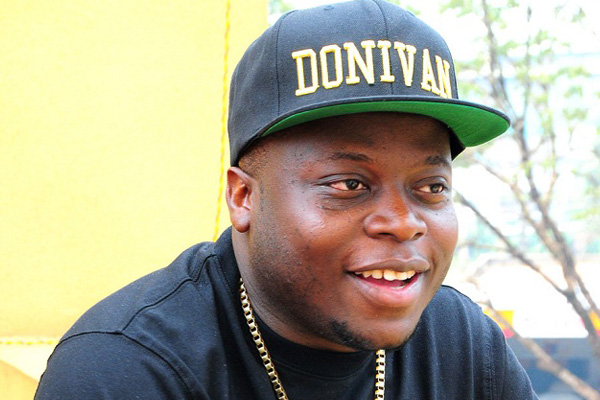
Every Ugandan remembers where they were when the news broke in May 2017. Ivan Ssemwanga, the Don, the King of the Rich Gang, the man who turned flamboyance into a brand, was dead.
He was 39. He had suffered a stroke. He had died in Pretoria. He would be buried at home in Nakalilo, Kayunga.
That was the official story. Simple. Final. Closed.


Except it was never closed.
Eight years later, the story refuses to rest. Not because Ugandans love gossip, although we do. But because the gaps in this story are too wide, too strange, and too consistent to ignore.
Let us walk through them slowly, the way any serious person would, without excitement and without malice.



1. A Body That Travelled Under Another Name
This is where the whole mystery begins.
When the body arrived in Uganda, it did not arrive as Ivan Ssemwanga. It arrived under a completely different name – Ali Ssenyomo.


Pause on that.
Why would a dead man need another name to cross a border?
In normal cases, a body is repatriated with one name, one passport, one death certificate, one paper trail. Hospitals do not mix up names. Airlines do not mix up cargo. Embassies do not mix up identities.
So we are left with only three possible explanations, and none of them are comfortable.
First, it was an administrative error. Possible, but a very big error for such a high-profile death.
Second, the name was changed deliberately to avoid attention, debts, or legal complications. If so, who authorised it, and why?
Third, the body that arrived was not Ivan at all.
You cannot ask that third question without sounding like a conspiracy theorist, but you also cannot avoid asking it once you accept the first fact: the name did not match.
2. The Autopsy Report Nobody Has Seen

In any death abroad, especially a sudden death of a young man, an autopsy is not a luxury. It is the document that tells a family what actually killed their son, brother, father.
Yet to this day, no one in authority has publicly produced Ivan’s autopsy report from South Africa.
Uganda’s High Commission in South Africa, the very office that is supposed to help coordinate when a Ugandan dies abroad, is said to have never seen it.
Now, to be fair, the law does not force a family to go through the High Commission. If a family is capable, wealthy, and well-connected, they can handle repatriation themselves. Ivan’s family was capable. So the Commission not being involved is not, on its own, proof of foul play.
But it becomes a problem when you add it to everything else. If the family handled it privately, then the family should have the report. If the hospital handled it, the hospital should have the report. If the South African authorities handled it, they should have the report.
So where is it?
A death without a paper trail is not a death. It is a rumour with a funeral.
3. The Hospital That Has No Record
This is the part that chills even the sceptics.
Journalists who later tried to trace the story say they contacted Steve Biko Hospital in Pretoria, the hospital where Ivan was said to have died. The response they got was devastating in its simplicity: there was never a patient admitted there by the name Ssemwanga. Not even by the other name.
Again, let us be careful. Hospitals can misspell names. Records can be lost. Staff can change. A journalist calling years later may not get the full file.
But a hospital of that size does not simply lose a famous patient who died of a stroke and whose death made international news. If he was there, there should be an admission number, a ward, a doctor, a time of death. Something.
Instead, there is silence.
4. The Coffin Nobody Was Allowed To Open
In Uganda, we see our dead. It is culture. It is closure. It is respect. Even when a body is badly damaged, family elders insist on seeing, on confirming, on saying goodbye properly.
In Ivan’s case, that did not happen in the normal way.
Workers at the funeral home in Mengo who handled the body say they were restrained from opening the coffin. The staff who prepared for burial, who are used to seeing bodies every day, say nobody among them actually saw Ivan’s body.
Only a very small circle of close family were given private time. His aunt is reported to have said she recognised him by his fingers, toes and nails.
Let us respect that aunt. Grief makes people see what they need to see. But from a purely investigative point of view, fingers, toes and nails are not identification. They are not DNA. They are not dental records. They are not a fingerprint match.
If you wanted to convince a nation, you would not rely on toes. You would rely on science.
5. The Rumours That Started Before The Burial
We must be honest about where the rumours came from.
They did not start in 2025 or 2026. They started in 2017, in voice notes that moved faster than any newspaper.
The claim was wild: Ivan had faked his death after a financial dispute and was undergoing plastic surgery to change his identity.
At the time, most people dismissed it as jealousy, as the usual Ugandan talent for turning a funeral into a thriller. Rich men have enemies. Famous men attract lies.
But look at the timing. The rumours did not start after people found gaps. The rumours started at the same time as the gaps were being created. That does not prove the rumours are true. It proves that people close to the situation sensed something was off from the very beginning.

6. What The Family Says, And Why It Matters
Against all of this, there is one powerful counter argument: the family says he died.
A mother does not bury an empty coffin for fun. A family does not hold a funeral, invite the world, throw money and champagne into a grave, and mourn for years, if they know the man is alive in another country.
And that funeral was real. The grief was real. The grave in Kayunga is real.
The family has paid the heaviest price for this mystery. Every time the story comes back, they are forced to relive it. That is why many Ugandans are now saying, let him rest in peace. Leave the family alone. The economy is hard enough. Politics is painful enough. Why dig up old pain?
That is a human argument, and it deserves respect.
But there is another human argument on the other side: truth is also a form of rest. A family cannot truly rest if the nation keeps whispering. A nation cannot truly move on if it feels it was lied to.
7. The Only Thing That Can End It
In the middle of all this noise, ordinary Ugandans have landed on the only logical solution.
Exhume. Test. Reveal.
Open the grave in Kayunga, take a DNA sample, compare it with his children, and publish the result.
If the DNA matches Ivan, the rumours die forever. The family gets peace. The journalists who raised questions will have to apologise. The country will finally close the chapter.
If the DNA does not match, then Uganda will have to confront one of the biggest deceptions in its modern history.
There is no third option. There is no more voice note, no more interview, no more “I heard” that will settle this. Only science can settle it.
So why has it not happened?
Exhumation is not easy. It needs a court order. It needs family consent. It needs money. It needs political will. And it needs courage, because once you open that grave, there is no going back to the comfortable story.
My Critical Take
I have followed this story for years, and I have come to one conclusion: this is no longer about Ivan Ssemwanga the man. It is about how Uganda handles truth.
We are a country that buries questions with our dead. We accept a coffin we did not open. We accept a hospital we did not verify. We accept a name we did not explain. We accept an autopsy we did not see. Then we call anyone who asks a question a gossip.
Ivan’s case is extreme, but the pattern is familiar. A rich man dies. The paperwork is messy. The officials are silent. The family is left to carry the doubt alone. And the public is left to fill the gaps with rumours.
If Ivan truly died, then the people who handled his death failed him. They failed to give him a clean, verifiable, dignified exit. They left his name open to mockery.
If Ivan did not die, then the people who handled his death succeeded in the greatest trick of all, and they fooled a whole nation.
Either way, someone failed to do their job properly.
That is why I do not join those who say “leave it to rest.” Rest does not come from silence. Rest comes from certainty. And right now, Uganda has no certainty.
Until we have a DNA result, until we have an autopsy report, until we have a hospital record, until we have an explanation for why a body travelled as Ali Ssenyomo, the question will keep coming back.
Not because Ugandans are cruel. But because Ugandans can smell an unfinished story.
Over to you, Ugandans, to judge.
Did we bury Ivan Ssemwanga in Kayunga on May 30, 2017?
Or did we bury a name, a rumour, and a coffin we were never allowed to open?