
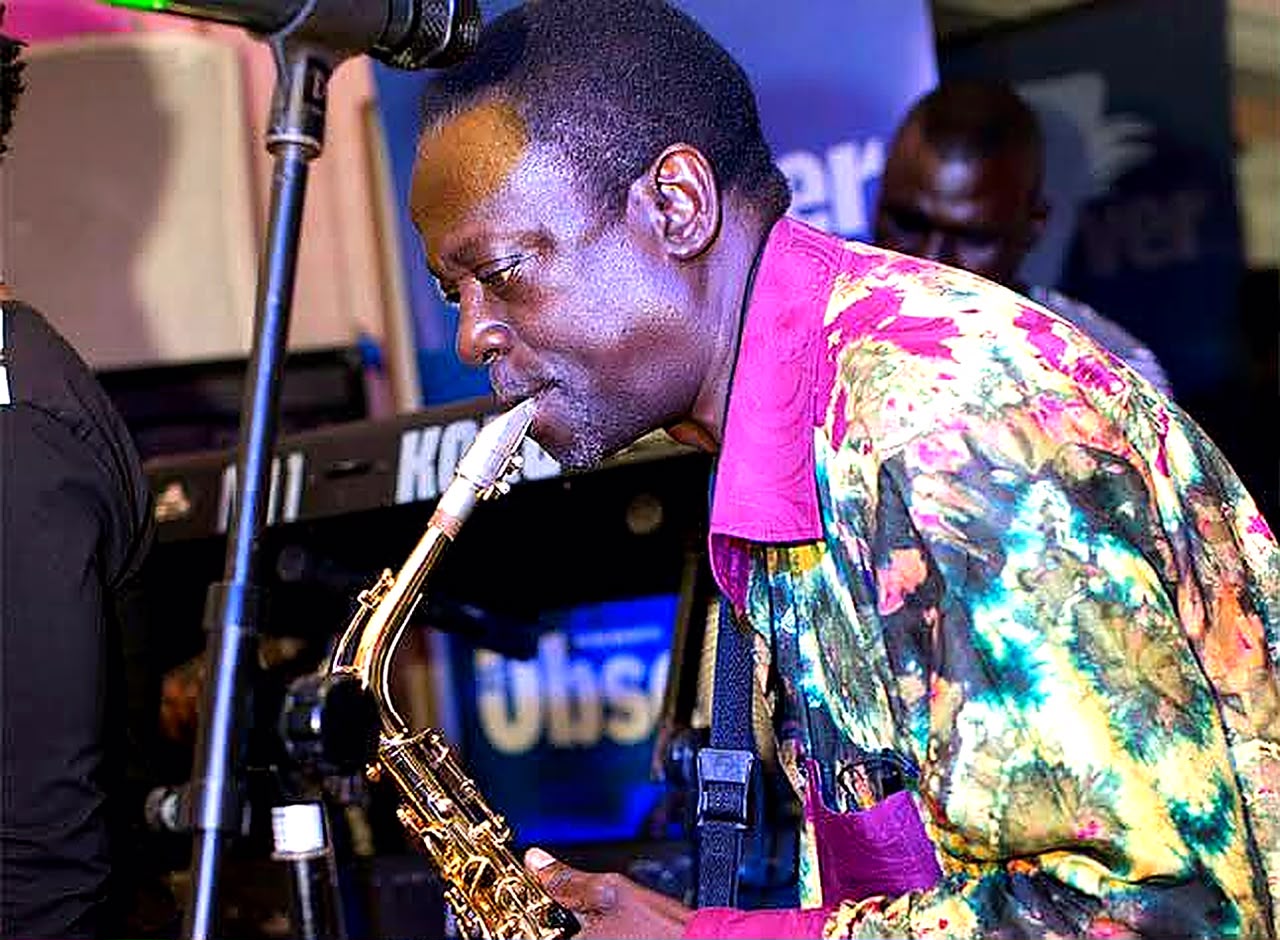
Every true legend lives two lives. One on stage, where we clap, sing along, and call him a hero. Another behind closed doors, where he is just a man – lonely, aging, and searching for the same warmth every man searches for.
Mzee Moses Matovu lived both lives to the fullest.
At 77, his name was already written in Uganda’s history. Before he became the soul of Afrigo Band, the longest surviving band on the continent, he was a sportsman who turned out for giants like SC Villa, Express FC, and Police FC. He later chose music and gave this country over fifty years of unmatched art. That is his legacy. That is what should be remembered.
But in his final hours, the legend became just a man again.
Police confirm that Matovu died around 5:30 am after a violent altercation in Kibuli, Kampala Suburb. Reports indicate he had spent the night in the company of a younger woman Rose Tumusiime, when another man, who claimed a relationship with the woman, confronted them. An argument broke out. Windows were smashed. The woman was allegedly assaulted. When Matovu stepped in to ask why she was being beaten, the confrontation turned on him. One punch was enough to end 77 years of life.
That is the tragedy. And yet, many have chosen to laugh at it.
Social media is filled with jokes. “What was a 77-year-old doing there?” “He should have known better.” It is easy to judge when you have never been 77.
This is where we are missing the point as a society.
As men, we are raised to be strong, to provide, to never complain. No one teaches us how to handle quietness. When the lights on stage go off, when children grow up and build their own lives, when the house becomes silent, many older men face a loneliness they cannot explain. Fame does not cure that. Money does not cure that. Only human connection does.
Part of our inherent battle in this life is to find beauty wherever we can, even in the midst of nowhere. We all fight battles only we truly understand.
Matovu at 77 still wanted to feel alive. Still wanted to feel desired, listened to, and seen as a man, not just as a national monument we bring out on national holidays. If he found someone who made him laugh, who called him, who made him feel young again for a few hours, which man can honestly say he would have the discipline to say no?
His crime was not desire. His crime was being human.
What killed Moses Matovu was not a woman. What killed him was toxic masculinity and violence, the belief by another man that a disagreement must be settled with fists, that a woman must be controlled, that a rival must be destroyed.
The prime suspect, a 41-year-old man Vicent Nsamba, has been arrested in Nansana and investigations are ongoing. The woman at the center of the incident is also assisting detectives at CID Kibuli. We must let the law establish the full truth.
But our duty as the public is different. Our duty is to protect his legacy from cheap gossip.
Do not compress fifty years of saxophone, of mentorship, of fatherhood, of putting Uganda on the world music map, into three hours of his last night. That is not who he was. That is simply how he left us.
Moses Matovu lived his story on his own terms and he died in the line of duty – the duty of living. He did not die forgotten in a corner. He died trying to live.
So before you forward that meme, before you write that cruel comment, ask yourself if you have ever been lonely.
No man should judge Moses Matovu. Let him rest in the honor he earned.
Rest in peace, Mzee.