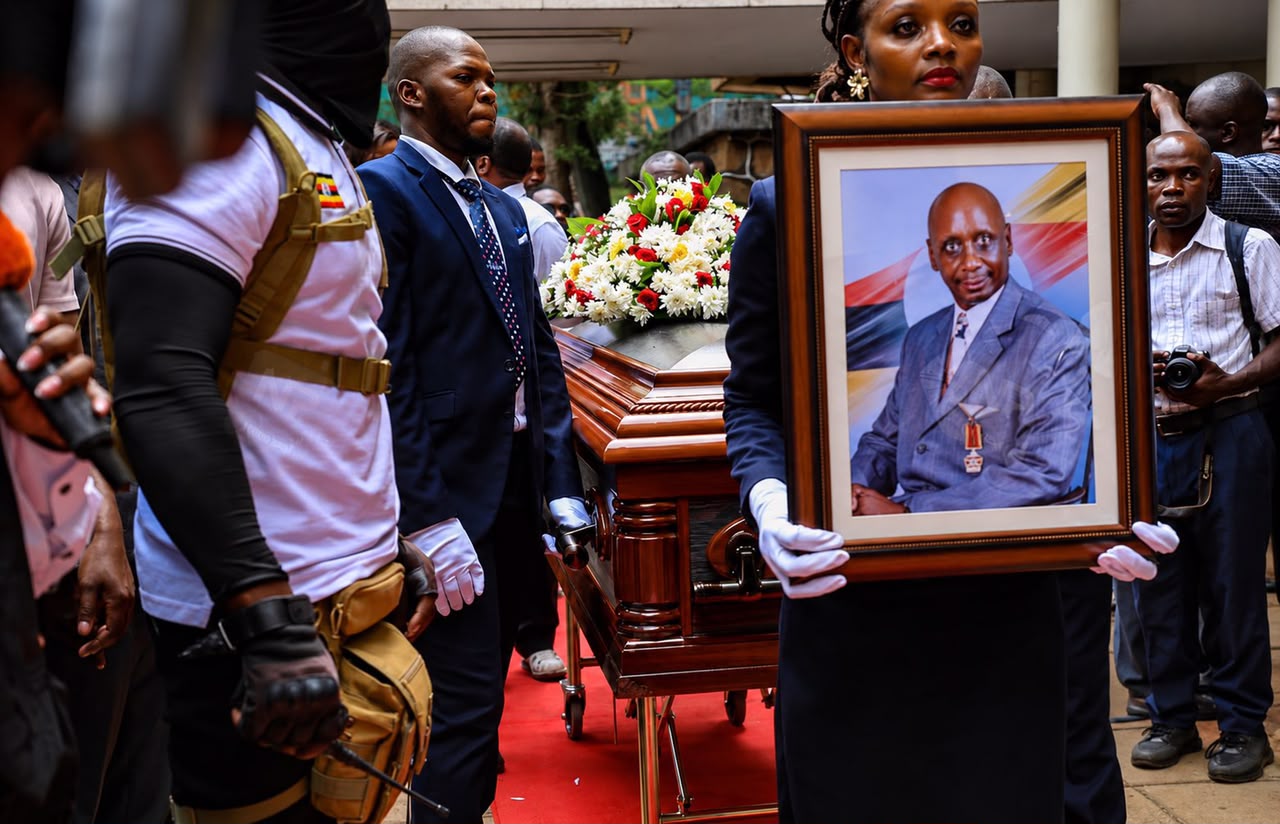
KAMPALA — Alex Mukulu is gone. And the state has stepped in.
President Yoweri Museveni has accorded an official state burial to Alex Edward Kabangala Mukulu. The announcement was first made by State Minister for Labour Mary Kamuli Kutesa at the National Theatre, and later confirmed by the Minister for the Presidency, Milly Babalanda.
In her statement, Babalanda said the President had granted the official burial and that the National Organizing Committee is now engaging the bereaved family to organize a befitting send-off on August 20, 2026, in Kijabijjo, Gayaza. She also sent condolences to the family, friends, colleagues in the Performing Arts Industry, and Ugandans at large.
Mukulu died on Saturday at age 72.
Why The State Stepped In
This is not just about protocol.
Mukulu was not a politician. He never held office. But for over 40 years he did something governments struggle to do: he held up a mirror to Uganda and made us look.
From 30 Years of Bananas to his radio, TV and stage work, he used satire to talk about power, poverty, corruption and culture. He did it with humor so sharp that even those being mocked had to clap.
That is why creatives gathered at the National Theatre. Not for a press statement. For a goodbye. Playwright. Actor. Instrumentalist. Teacher.
When a country loses someone like that, a regular funeral feels small. A state burial says: this person belonged to all of us.
What Mukulu Meant To Ordinary Uganda
For the boda rider in Nateete: You may not know his full name. But you know his lines. You’ve quoted them in taxis. His comedy made hard times lighter.
For the student in Makerere: He proved you could make a living telling Ugandan stories in Ugandan languages, without copying the West.
For the parent: He taught your children history through drama. Colonialism, independence, dictatorship, AIDS, politics. All of it came through characters you could recognize from your own village.
He didn’t need a big budget. He needed a stage, a drum, and truth. And he had all three.
What Mukulu Meant To The Elite
For government: This is legacy management. Honoring Mukulu is also honoring the sector ahead of tourism campaigns, and the push for “Uganda’s soft power”.
For the Ministry of Gender and Arts: The pressure is now on. If we give state burial to an artiste, we must also fund theatres, copyright protection, and pensions for ageing artistes. One funeral cannot fix 40 years of neglect.
For the private sector: Mukulu showed there is money and influence in culture.
The Bigger Conversation This Burial Starts
A state burial is honor. It is also a question.
If Mukulu deserved this, why did so many artistes before him die in poverty?
If the arts shaped this nation, why are our theatres still leaking and our actors still hustling?
Giving him a state send-off is correct. But the real tribute will be what happens after August 20th.
Will the National Theatre get consistent funding?
Will drama be taken seriously in schools?
Will we create a fund so the next Alex Mukulu does not depend on harambees at 70?
Final Word
On August 20, Uganda will bury Alex Mukulu in Kijabijjo, Gayaza with full state honors. There will be speeches, the flag, and a gun salute.
But the truest tribute to him will not be in Gayaza. It will be on a stage in Kamwokya, in a classroom in Gulu, in a community hall in Mbarara.
Where a young Ugandan stands up, picks a drum, and decides to tell our story — honestly, and with laughter.
That is what Mukulu did for 4 decades.
Rest well, Mzee. You made us see ourselves.