Yesterday the courtroom in Kampala was full.
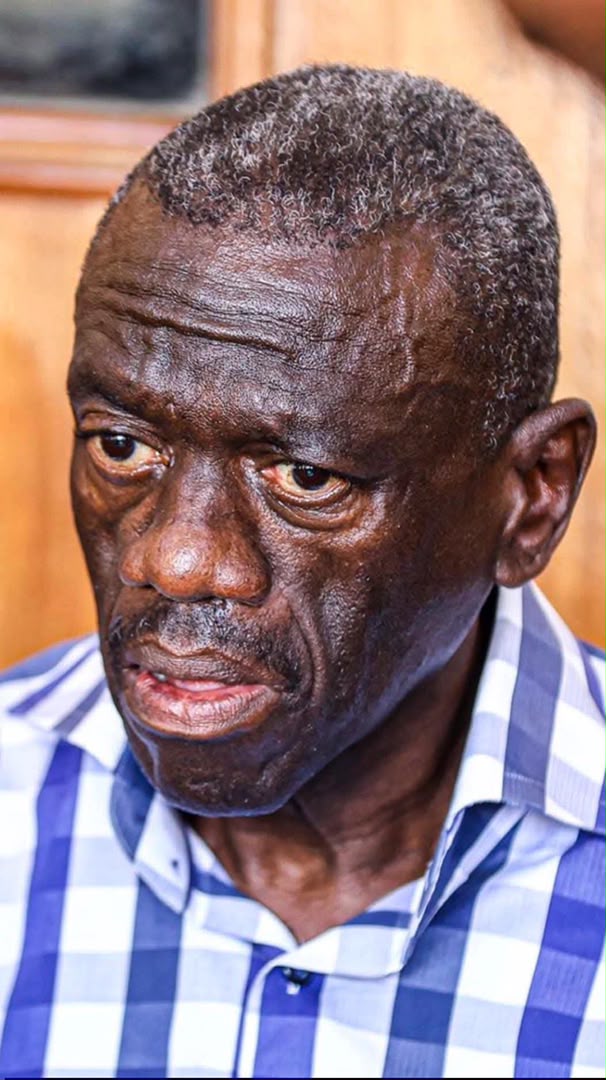
Dr. Kizza Besigye, 69, stood up. He said he would not take part in a trial where he was denied lawyers of his own choice. Words were exchanged with Justice Emmanuel Baguma. Then he collapsed. He was rushed out.
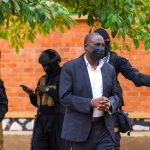
Today the bus from Luzira arrived. Two men came down: Hajji Obeid Lutale and Captain Denis Oola. Besigye did not.
Justice Baguma told court he had received a letter. The reason for absence: the accused is unwell. In ICU. According to his wife, Winnie Byanyima, he is unconscious. The case was adjourned to August 4th. The trial, in other words, moved forward with an empty chair at its center.
This is where we are. And it is worth asking, slowly, what this means.
What Actually Happened in Court
Let’s strip it to the facts, because in times like this facts get buried under noise.
Yesterday: Besigye appears for his treason trial. He objects. His objection is not to the charge. It is to the process. He says he is being denied legal representation of his choice. He protests. He collapses. He is taken to hospital and admitted to ICU.
Today: The court sits. His co-accused are produced. Lutale tells the judge on record: I do not fear trial, but I want a fair one. I did not consent to state brief lawyers. Besigye is absent. The judge says a letter has been received about his illness. The matter is adjourned.
The Uganda Law Society issued a statement. They did not talk about guilt or innocence. They talked about process. They warned against haste mistaken for speed. They asked for independent medical care, for open proceedings, for pending applications to be heard. Their last line was this: Publicity is the soul of justice. Without it, justice becomes a ghost.
The Core Issue Is Not Besigye. It Is Choice.
In Uganda, every accused person has two constitutional rights that matter here: the right to a fair hearing, and the right to a lawyer of their own choice.
Article 28 does not say “a lawyer, any lawyer.” It says, your lawyer. The person you trust to speak for you when the state has all the power.
When a 69-year-old man who has been in public life for 40 years says “I would rather die than proceed with counsel I did not choose,” he is making a point beyond himself. He is saying: if this process can be done to me, it can be done to anyone. A boda rider in Arua. A teacher in Soroti. A student in Mbarara.
For the ordinary Ugandan, this is not about politics. This is about: if I am taken to court tomorrow, will I be allowed to bring the person I trust to defend me? Or will someone be appointed for me, whether I like it or not?
For the elite, the lawyers, the judges, the civil society: this is a test of institutional independence. When applications to stay proceedings are pending but the case moves anyway. When a man is in ICU and the file is still being called. People start to ask: is this still a court, or is it an administrative office?
Why Proceeding Without Him Matters
Courts must run. Cases cannot wait forever. That is true.
But there is a difference between a reasonable adjournment and proceeding as if nothing happened.
An ICU is not a traffic jam. It is not “I missed the taxi.” It is a life-threatening condition. To call a case, note the absence, and adjourn for 5 days is procedure. But the public will remember the image: two co-accused in the dock, one empty space, and a judge reading a letter.
That image will outlast the judgment. Because justice is not only what is written in the ruling. It is what people saw.
Lutale’s statement today was important. “I do not fear being tried. I want a fair hearing.” That is the demand of millions of Ugandans. Not immunity. Not impunity. Just fairness. A chance to be heard, by lawyers you chose, in a court that is open, with rules that do not change overnight.
Three Things The Judiciary Must Do Now
This is not about taking sides. It is about protecting the idea of a court.
1. Medical Independence First
The state must allow independent doctors to assess Besigye. Not just prison doctors. Not just a letter. A real, verifiable medical report. If a man is too unwell to stand trial, then he is too unwell to be tried. Full stop.
2. Hear the Pending Applications
MA 269 and MA 248 are not distractions. They go to the heart of the trial: representation and repression of counsel. You cannot build a house and ignore the foundation cracks. Hear them. Rule on them. Before the main trial moves an inch further.
3. Open the Doors Again
Restricting media, photography, and live coverage at the eleventh hour sends one message: we have something to hide. But courts gain authority by being seen. Live-stream through judiciary channels. Let accredited media in. Let Ugandans watch. Publicity is the soul of justice.
Final Word: The Empty Dock
An empty dock is a powerful thing.
It can mean a fugitive. It can mean contempt. Or it can mean protest.
Yesterday, Besigye didn’t choose the dock empty rather than fill it on terms he considered unjust. Today, the court chose to proceed without him.
Between those two choices lies the question Uganda must answer: Do we still believe that a fair trial is not a favor from the state, but a right of the citizen?
On August 4th the court will sit again. Besigye may be well. He may not. But the question will still be there, sitting in that empty space.
And it will not go away until it is answered properly with law, with medicine, and with the public watching.