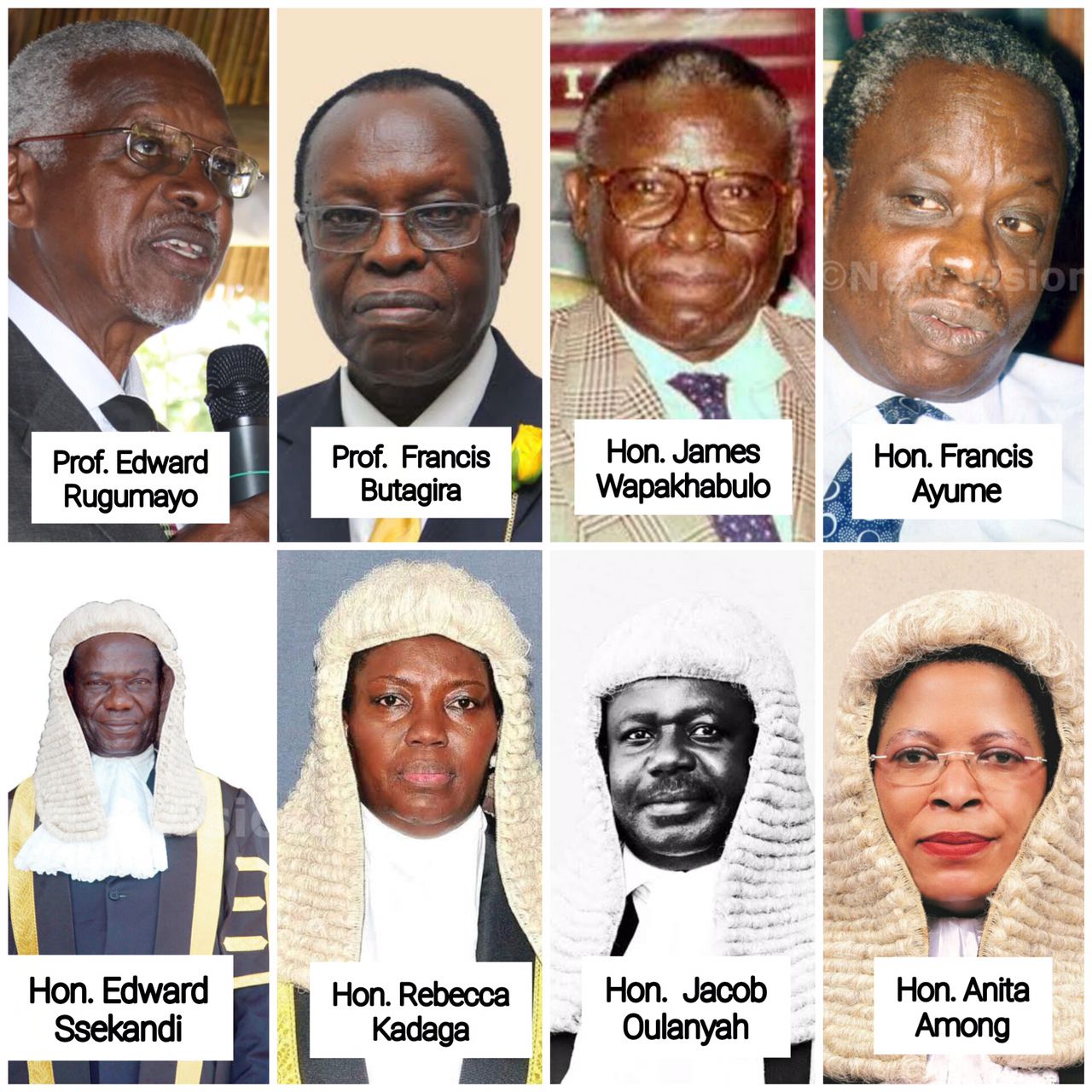
Look at the 8 faces in that photo. They don’t just show names. They show 8 different versions of Uganda. One face is missing; the current Speaker, you definitely know who he is, Jacob Oboth Oboth. You will briefly get to know about him in this article, since you already do.
From Prof. Edward Rugumayo in the early post-independence years, through Butagira, Wapakhabulo, Ayume, Ssekandi, Kadaga, Oulanyah… to Anita Among and now Oboth Oboth. The wig stayed. The robes stayed. But the job changed. The country changed. And the expectations changed faster than both.
So what does the comparison tell us? Not gossip. Not personalities. A pattern. A mirror of how Parliament itself has shifted from 1963 to 2026.
The First Speakers: Professors, Diplomats, Institution Builders
Rugumayo, Butagira, Wapakhabulo. These were men who came with academic weight and international experience. Rugumayo was a professor before he sat in the chair. Butagira was a lawyer and diplomat. Wapakhabulo was a foreign minister.
Their Parliament was small, elite, and trying to build rules from scratch. The Speaker’s job then was simple in theory: keep order, protect procedure, make sure debate followed rules. The country was younger. Politics was about ideas more than survival.
They didn’t have TV cameras. They didn’t have WhatsApp clips. Their audience was 80 MPs and history books. So the Speaker could afford to be slow, measured, academic. The wig meant authority. The chair meant neutrality. That was the contract.
Francis Ayume came next with legal sharpness. A lawyer who understood both the courtroom and the chamber. Under him, Parliament was finding its voice after years of turmoil. The Speaker was still referee more than player.
THE WIG USED TO MEAN “ABOVE POLITICS”. TODAY IT MEANS “IN CHARGE OF POLITICS”
That’s the shift. Rugumayo to Ssekandi presided over a House where the Speaker was expected to disappear into procedure. You knew the rules, not the person. But from Kadaga onward, Ugandans started knowing the Speaker’s face, voice, style, even humor. The job moved from “guardian of rules” to “chief explainer of Parliament to the public.” TV, radio, then social media forced that change. Suddenly the Speaker wasn’t just managing MPs. They were managing public trust. And public trust is a harder job than managing debate.
Kadaga, Oulanyah, Among: The Era of Visibility and Pressure
Rebecca Kadaga broke the gender wall and stayed 20 years. She made the Speaker visible. She spoke for Parliament outside Parliament. She argued with government. She argued with donors. For many Ugandans, “Speaker” became “Kadaga” the same way “President” became Museveni.
Jacob Oulanyah had the shortest, most painful tenure. A brilliant legal mind, but he came in when Parliament was under the heaviest public scrutiny ever. Every ruling went viral in 30 seconds. Every silence was judged. He tried to bring back academic calm, but the House had already changed speed.
Then Anita Among. Youngest, most visible, most controversial. Under her, the Speaker’s office became a full media operation. Press briefings. Social media. Direct fights with civil society, donors, and MPs. Love her or hate her, no Ugandan could say they didn’t know who the Speaker was. The wig was now a brand.
Now Oboth Oboth: The Return to Legal Weight, Under New Pressure
Oboth Oboth steps into a chair that has been reshaped by 3 forces: money, media, and mistrust.
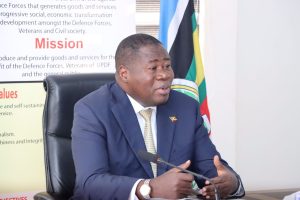
Money: Parliament’s budget is bigger, allowances are bigger, scrutiny is bigger. Every shilling is debated online before it’s debated in the House.
Media: A Speaker’s ruling on procedure now competes with TikTok commentary for what Ugandans believe happened.
Mistrust: Ordinary Ugandans and elite observers both ask the same question: “Is the Speaker for the House, or for the Executive?” That question didn’t exist for Rugumayo. It’s unavoidable for Oboth.
Oboth comes with legal credentials and military discipline. That’s his advantage. He doesn’t need to build name recognition. He needs to build institutional trust. The job for him is different from Kadaga’s and different from Among’s. Less about visibility. More about credibility. Less about speeches. More about rulings that both sides accept as fair.
THE ORDINARY UGANDAN DOESN’T CARE ABOUT PROCEDURE. THEY CARE ABOUT FAIRNESS
That’s the real comparison. Rugumayo’s Parliament could survive on procedure because Ugandans weren’t watching daily. Oboth’s Parliament cannot. A mother in Arua, a boda rider in Soroti, a student in Mbarara… they don’t read Hansard. They watch 15-second clips. They ask one question: “Was that fair?” If the Speaker’s answer to that question is clear, Parliament wins respect. If not, all the wigs and robes in the world won’t save it.
So the comparison across 8 Speakers isn’t about who was “better.” It’s about what Uganda needed at each stage. Early years needed builders. Middle years needed defenders. Today needs a referee that both teams trust, even when they lose the point.
What This Means Going Forward
The Speaker’s seat is Uganda’s most symbolic job after the President. It tells us how we handle disagreement. Do we shout? Do we walk out? Do we follow rules even when they hurt us?
Rugumayo to Oboth is 60+ years of answering that question differently. The wig is the same. The challenge is not.
Oboth Oboth doesn’t need to be Kadaga. He doesn’t need to be Among. He needs to be the Speaker Uganda needs in 2026: legal, calm, firm, and trusted by the ordinary Ugandan who will never enter Parliament but whose life is decided there.
That’s the bar now. Higher than any wig.