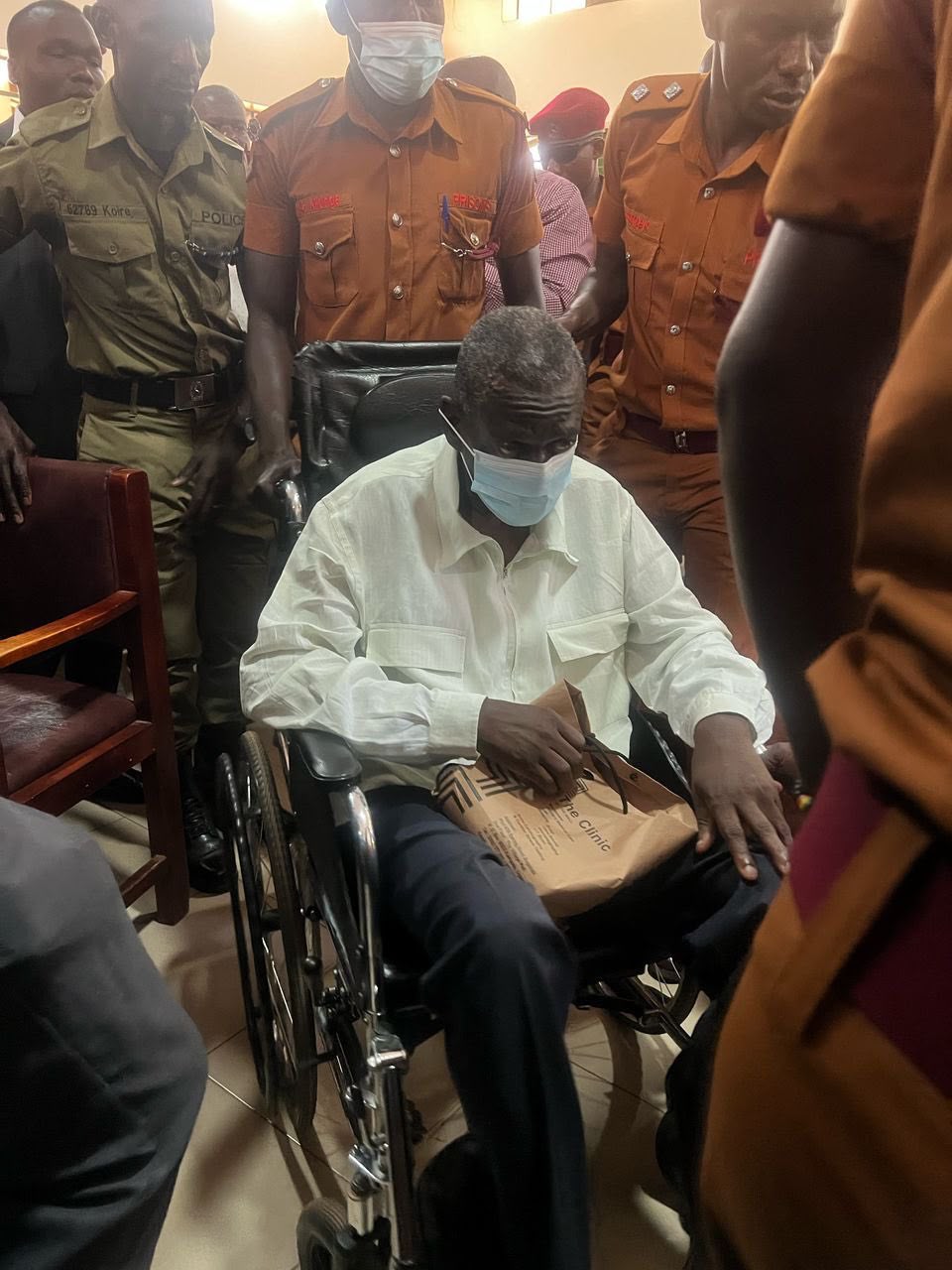
A man is in a hospital bed. He cannot walk properly. He cannot speak properly.
The next day, court is told he “refused” to appear by Zoom.
That is where we are with Dr. Kizza Besigye.
Winnie Byanyima, UNAIDS Executive Director and Besigye’s wife, has gone public with a sharp accusation: prison authorities gave the court half the story. They said he declined a virtual appearance. They did not say he is still admitted at the Luzira Prison medical facility, recovering.
Besigye has been in detention since November 2024 facing treason charges. On July 29, 2026, he collapsed in court while protesting issues around his legal representation. His family says he is still struggling.
What Happened In Court
According to proceedings, Prison Officer Hiire told the court that Besigye was asked to appear via Zoom and declined.
Justice Emmanuel Baguma then referenced a single sentence from a Mulago Hospital medical report and ruled that Besigye was fit to continue with proceedings.
That is what triggered the alarm.
Byanyima’s response was direct. She said the full picture was left out. That Besigye is admitted. That he is still recovering. That turning his hospital bed into a court dock ignores both his health and his right to be present in his own trial.
She also named Commissioner General of Prisons Johnson Byabashaija, saying the institution tried to push forward without full disclosure.
Other voices, including human rights lawyer Martha Karua, have joined the call for transparency, proper medical care, and consideration of medical bail.
For The Ordinary Ugandan: This Could Be Any One Of Us
To the boda rider in Kawempe: Imagine you are sick. Really sick. You can’t stand. The magistrate says “appear on Zoom.” But the prison doesn’t tell the judge you are on a drip. What happens to you?
To the mother in Soroti: Your son is arrested. He falls ill in custody. You are told “the case must continue.” But no one shows you the full medical report. Only one line.
That is the fear here. Not about politics. About process.
If courts can proceed when the accused is in a hospital bed and the full medical file is not on record, then what protection does Article 28(5) of the Constitution really give us? That article is clear: a person has a right to be present at their trial, except where the law allows otherwise.
For The Elite: Law, Medicine, And Power Collide
For lawyers: The issue is not whether Zoom is possible. The issue is informed decisions. A judge cannot decide fitness based on one sentence. Where is the full Mulago report? Where is the Luzira prison doctor’s assessment? Where is the opinion on whether he can follow proceedings, give instructions to lawyers, and withstand the stress of a treason trial?
Proceeding without that is dangerous precedent.
For prison authorities: Your job is custody and care. If a prisoner is admitted, say so. In full. To the court. To the lawyers. To the family. Withholding context, even by omission, erodes trust. It also exposes officers to accusations of misconduct.
For government: Treason is a serious charge. The state must prosecute. But the state must also be seen to prosecute fairly. A conviction that happens while the accused is hospitalized and unable to participate will not stand the test of time, in law or in public memory.
For the opposition and civil society: This is not just about one man. It is about the line between security and rights. When that line moves, it moves for everyone. Today it is Besigye. Tomorrow it could be a journalist, a student, a local leader.
The Hard Questions We Must Ask
1. Medical transparency
Why was only one sentence from Mulago read in court? Release the full report, or an independent medical board assessment. Let doctors, not clerks, speak to fitness.
2. What is “presence” in 2026?
If a person cannot come to court, and cannot meaningfully participate on Zoom from a hospital bed, what are the options? Adjournment? Medical bail? A bedside hearing with lawyers and a judge? The law must bend to reality, not the other way around.
3. Accountability in information:
Officer Hiire told the court what he was told. Did he have the full medical brief? If information was missing, who failed to provide it? Courts and prisons must speak with one voice, and that voice must be complete.
4. Medical bail
Uganda has granted medical bail before. The test is simple: is the person a flight risk, and can they be treated outside? If Besigye’s doctors say he cannot walk or speak properly, then keeping him in trial mode while admitted is cruelty, not justice.
What Byanyima Is Really Saying
“ They tried to turn his hospital bed into a dock.
They are determined to convict him and nothing, not the law, not even the Constitution, will stand in their way.”
That is not just about Besigye. That is a warning.
“If they can do this to him, no Ugandan who speaks out is safe.”
You may agree with Besigye or you may not. You may support the government or oppose it. But the Constitution is not for your side only. It is for all sides. The moment we allow trials to run over a sick person in hospital, we have moved the line for every citizen.
Final Word
No one is asking for special treatment. No one is asking for the case to disappear.
What is being asked is basic: full medical disclosure, a fair process, and respect for the right to be present and to participate.
If Besigye is fit, show the full medical evidence and let him be heard.
If he is not fit, then the court must wait, or find a lawful way to accommodate his condition.
Justice that ignores a hospital bed is not justice. It is procedure without humanity.
And a country that treats its sick in custody the same way it treats its healthy in court, is a country that cannot call itself governed by law.