
Walk through the markets in Masaka, Mbarara, or Mbale on a Monday morning and you’ll see it. Sacks of coffee piled high, traders shouting prices, farmers waiting to negotiate. On paper, Uganda’s coffee sector is on a run. Export volumes and earnings are at highs not seen in a decade. The country is Africa’s largest coffee exporter and a top 10 producer globally.
Yet ask a farmer in Kasese how much they earned per kilo this season, and the answer rarely matches the excitement in the export reports. The boom is real. But it’s uneven. To understand why, you have to follow the bean from the farm gate to the shipping container.
The Farm Gate: Where the Volume Is, But Not the Margin
About 1.7 million Ugandan households grow coffee. Most are smallholders with less than 2 acres. They do the hard work: planting, weeding, picking, drying. Their cost is mostly labor and time. Their price is set by middlemen who come with cash and a scale.
Right now, a kilo of dry Arabica or Robusta at the farm gate goes for between 8,000 and 12,000 UGX depending on season and location. That sounds decent until you factor in the labor, transport to market, and the fact that a good tree yields 2-4 kg per season. For a farmer with 500 trees, that’s maybe 1.5M to 3M UGX a year. It keeps the household running, but it doesn’t build a house, pay university fees, or buy a pickup.
The problem isn’t price alone. It’s volatility. When global prices spike, local prices lag. When global prices fall, local prices crash faster. Farmers have no buffer, no storage, and little bargaining power. The person with the weighing scale and the motorcycle has both.
The Middlemen and Primary Processors: The First Real Margin
Once coffee leaves the farm, it moves fast. Traders bulk it, dry it further, and sell to primary processors or exporters. This is where margins start to appear.
A trader buying at 10,000 UGX per kilo and selling at 12,500 UGX after drying and bulking makes 2,500 UGX per kilo with minimal risk. Do that for 20 tons a month and the math works. Primary processors who hull and grade coffee add another layer. They invest in machinery, but they also control quality standards that determine whether coffee gets a premium price abroad.
This layer is mostly Ugandan-owned. It’s where local capital is slowly accumulating. But it’s also where quality gets lost. Coffee gets mixed, over-dried, or stored badly. That knocks 20-30% off the potential export price before the bean even leaves the country.
Exporters: The Visible Winners
Uganda has about 20 licensed exporters handling the bulk of shipments. They buy processed coffee, contract with international buyers, manage logistics, and deal with compliance. When coffee hits 3.50 USD per kilo FOB, exporters are clearing 200-400 USD per ton in margin after costs.
This is the group that shows up in the export statistics. They pay tax, create formal jobs, and have the capital to pre-finance farmers and traders. They also absorb the currency and shipping risk. In a bad year, they lose money. In a good year, they make it back quickly.
Remember that, most farmers like us, are cheated in the process when exporters lie about their contracts compliance while buying processed coffee yet the market is paying them double.
For the elite and investors, this is the investable part of the chain. For the farmer, it feels distant. The exporter’s success rarely translates to a higher farm gate price the next season because contracts are often short-term and price-taking.
The Missing Middle: Roasting and Branding
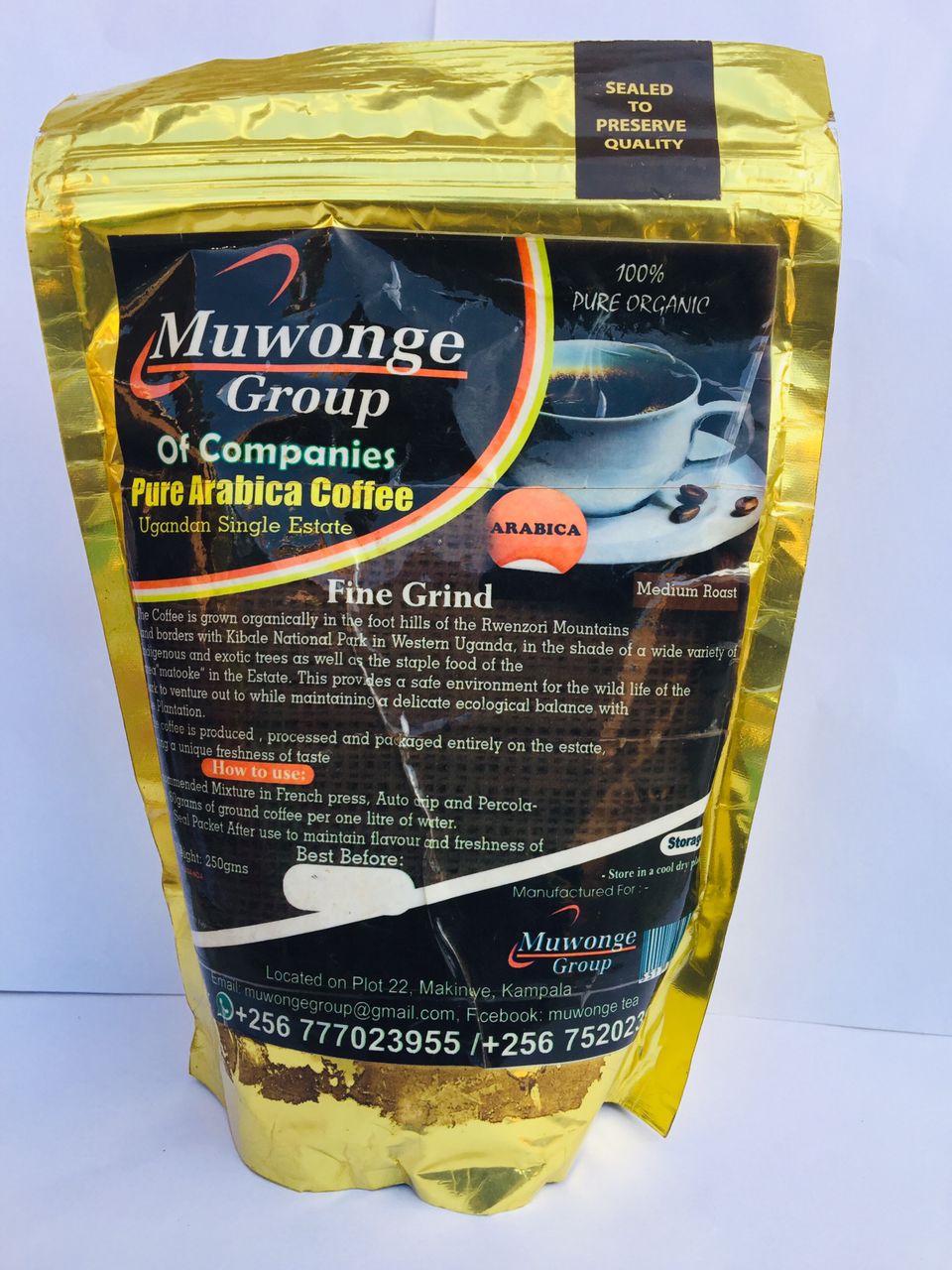
Here’s where Uganda loses money. Less than 5% of coffee is roasted and branded locally. The rest leaves as green bean. A kilo of green bean sells for 3-4 USD. The same kilo roasted and branded in Kampala or exported as specialty coffee can fetch 12-20 USD retail.
The barrier isn’t demand. Ugandans drink coffee. The diaspora buys Ugandan coffee. The barrier is capital, consistency, and market access. Roasting requires upfront investment, quality control, and branding that can compete on shelves in Nairobi, London, or Dubai. Most small processors can’t get there without patient capital and technical support.
This is the gap between “exporting volume” and “capturing value.” Every country that moved up the coffee ladder—Ethiopia with Yirgacheffe, Rwanda with specialty lots, Colombia with Juan Valdez—did it by owning more of the roasting and branding stage.
What Has to Change for Farmers to Win
You can’t fix the farm gate price without fixing what happens after it. Three things would shift the balance.
First, aggregation and quality control at parish level. If 50 farmers bulk and dry together to meet export grade, they cut out one layer of middlemen and command a 15-20% premium. Cooperatives that actually work do this. Most don’t because of trust and governance issues.
Second, local roasting capacity. Government and private investors need to back small and medium roasters with shared facilities, packaging, and market linkages. The goal isn’t to replace exports. It’s to create a domestic premium market that pays better than the export floor.
Third, price transparency and contracts. Farmers need to see real-time export prices and have access to forward contracts. Mobile platforms can do this, but they only work if traders are compelled to honor them. Right now, the information gap is the biggest advantage buyers have.
The Real Test
Uganda can keep exporting 8-9 million bags a year and feel good about the numbers. But if 80% of the value leaves the country in a jute sack, the “boom” stays quiet for the person who grew the coffee.
The opportunity is in the 20%. The 20% that gets roasted here, branded here, and sold at a price that reflects the work that went into it. That’s where jobs are created, where youth stay in agriculture, and where coffee becomes an industry, not just a crop.
For the ordinary Ugandan, the question is simple: will my coffee earn me enough to send my kids to school without selling land? For the elite and investors, the question is: where do I put money in the chain to capture value before it leaves Entebbe?
Right now, the answer to both is the same place—between the farm gate and the shipping container.