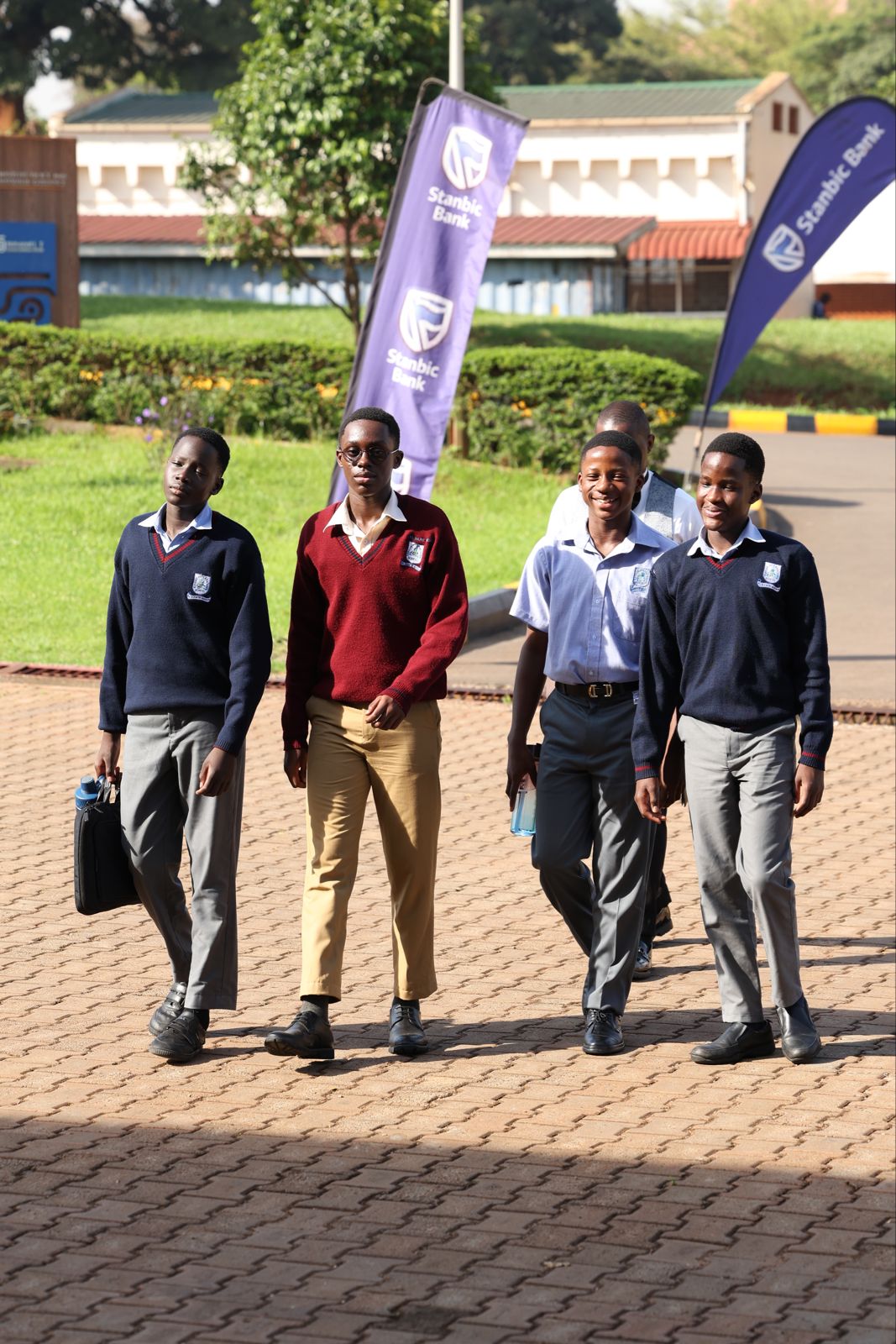
The Stanbic National Schools Championship is back. And this time, the call is simple: Flex Your Genius.
Season 11 of the competition officially opened this week, pulling together some of the sharpest students from secondary schools across Uganda. Around 200 students have been selected for the boot camp stage — the engine room where ideas stop being essays and start becoming prototypes.
For years, parents and teachers have complained that school ends with marks on paper, not skills in the hand. This programme answers that complaint head-on.
Not a Debate Club. A Business Incubator.
If you think this is another quiz where students shout answers for a trophy, you’ve missed the point. The Championship was redesigned to mirror how the real world works.
Students don’t just compete. They go through mentorship. They work in teams. They create an idea, they refine it, they test it, and they learn how to pitch it. By the end, many leave with a working solution they can take back to their village, district, or even register as a business.
Allen Kagina, Chairperson of the TVET Council of Uganda, put it bluntly: “This is not just a competition but a training opportunity. Students go through mentorship, work in teams and create, refine and incubate ideas. They develop the ability to think through contemporary problems.”

That word “contemporary” matters. These students are not solving 1990s problems. They are looking at today’s Uganda — youth unemployment, climate change, broken food systems, digital gaps — and asking, “What can I build?”
Why Government Is Paying Attention
The Ministry of Education and Sports has been pushing the competence-based curriculum for years. The idea is to move from cramming to doing. From theory to practice.
The Stanbic Championship fits that vision like a glove.
Juliet Atuhairwe, Commissioner for Secondary Education, made the link clear: “We appreciate this programme as it is well aligned with the competence-based curriculum and the government’s priorities in skilling, innovation, and youth empowerment.”
Translation: Government sees this as a private partner doing public work. They train students to think, build, and earn. That reduces pressure on government to create every job
What Happens at Boot Camp?
Boot camp is where the 200 selected students are split into teams. Each team identifies a real problem in their community. It could be post-harvest loss in maize. It could be girls dropping out due to lack of pads. It could be fake agro-inputs killing farms.
Then the work starts. With mentors from business, tech, and agriculture, students design a solution. They cost it. They brand it. They learn to present it in three minutes to a panel that asks hard questions — the same way an investor would.
The best ideas don’t end at boot camp. They are incubated. That means Stanbic and partners help the students build it further, sometimes connecting them to seed funding or markets.
One past team built a solar dryer that helped a women’s group in Luwero stop losing tomatoes. Another created a simple app to track school fees payments for parents in rural areas. These are not school projects. They are early businesses.
Why “Flex Your Genius” Is the Right Theme
Season 11 is dubbed “Flex Your Genius.” It’s a dare. Uganda has talent in every district. But talent hidden in a notebook helps no one.
Flexing genius means showing it. Testing it. Letting it fail and fix itself. The Championship gives students permission to try — and safe space to fail — before the real world punishes them for mistakes.
It also kills the lie that innovation belongs to university graduates in Kampala. A 16-year-old in Paidha or Kabale can see a problem that a PhD in Makerere has never faced. This platform lets her speak.
What Uganda Gets Out of This
We talk about youth unemployment as a time bomb. But bombs are built when energy has nowhere to go.
A programme that takes 200 students and teaches them to create, not just complain, is defusing that bomb one team at a time.
They learn teamwork. They learn budgeting. They learn that an idea is worthless until you sell it. Those are not school lessons. Those are life lessons.
The Championship won’t fix Uganda in one season. But every year, it sends back dozens of teenagers who no longer ask, “Who will give me a job?” They start asking, “What job can I create?”
That shift in thinking is the real prize.
Watch as the brightest young minds take the stage turning ideas into real solutions.