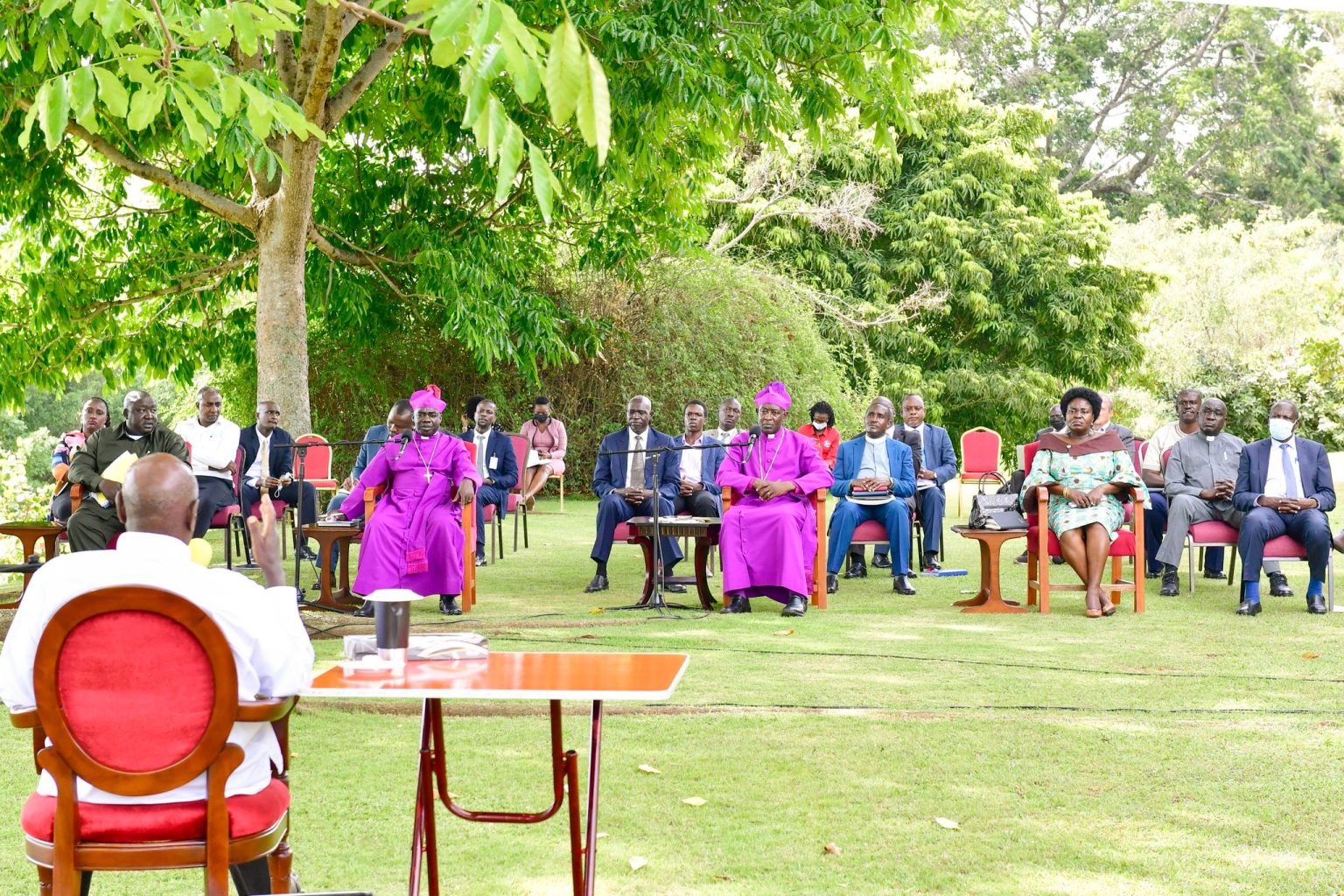
The Archbishop of the Church of Uganda does not want to be a martyr. He said it plainly: “I am not ready to be KILLED because I have a family.”
In one sentence, Dr. Stephen Kaziimba Mugalu ripped open a debate that has lived in Uganda’s bones since 1977. Can a church leader speak truth to power without becoming Archbishop Janani Luwum — the man Amin’s soldiers murdered for that same truth? And if he refuses, does the Church still have a voice, or just vestments?
The row started when critics told Kaziimba to “be brave like Luwum” and condemn human rights violations more forcefully. His answer was raw, almost tired: “I am a person, I need life also. I am not a savior. I am not here to carry all your problems. You take them to the cross, I do my part and leave them to God.”
Then came the line that cut deepest: “You can speak and speak and speak with no impact. John the Baptist spoke and did a good job, but he lost his head and the mission ended there.”
The political meaning: Fear still lives here
One citizen heard Kaziimba’s words and drew a hard conclusion: “The Archbishop of the Church of Uganda is telling us that the Government of the Republic of Uganda murders its citizens with impunity.” That is the political wound. Whether the Archbishop meant it or not, his refusal to risk death sounds like confirmation that death is still on the table for critics.
His defenders ask a different question: “How can he claim to fear being killed like Archbishop Janani Luwum when the country is no longer under Idi Amin’s reign of terror?” To them, 2026 is not 1977. Uganda has a constitution, courts, Parliament, and cameras. A modern Archbishop, they argue, can speak and live. To choose silence is not wisdom — it is “moral cowardice,” as one critic put it. “This moral coward has no business leading the Church of Uganda,” the comment read.
But the Archbishop’s supporters push back with kitchen-table logic: “He is right. The man has a family that loves and cares for him and guys are busy asking him to lay down his life. The ones pushing for your martyrdom will not feed your family when you are no longer here.”
That is the Ugandan dilemma in one sentence. We want heroes. We don’t want to pay their school fees after they’re gone.
The religious meaning: What is the Church for?
Kaziimba’s theology is clear: he is not the savior. His job is to point to the cross, not hang on it. “I do my part and leave them to God.” For many evangelicals in the Church of Uganda, that is orthodox. The pastor buries, counsels, prays, and preaches. He is not elected to fight State House.
But Luwum’s shadow is long. He died not because he wanted to be a politician, but because politics came for his pulpit. Amin’s men didn’t ask for a statement — they answered one. So when Kaziimba invokes John the Baptist — “he lost his head and the mission ended there” — he is making a strategy argument, not just a safety one. A dead prophet can’t baptize tomorrow. A jailed bishop can’t ordain priests next month.
The question for the Church of Uganda is practical: Does prophetic silence preserve the institution so it can do good for 50 more years? Or does it rot the institution from inside, until no one listens when it finally speaks?
*The human meaning: Uganda is tired of burying its brave*
Strip away the robes and titles. Kaziimba’s words resonated because they were human, not holy. “I have a life to live.” Every boda rider, teacher, and market woman who has ever been told “be brave, speak out” while holding a baby understands that sentence.
Uganda has no shortage of graves for brave men. We have shortages of school fees, rent, and medicine for the families they left behind. The public that demands martyrdom rarely adopts the orphans. The state that punishes defiance rarely pensions the widow.
So Kaziimba did what many Ugandans do daily: he calculated. He looked at Luwum’s statue, at John the Baptist’s head on a plate, at his own children, and chose to preach on Sunday and go home.
What happens next matters more than what he said
Outrage is easy. Critics will call him a coward for a week. Supporters will call him wise for a week. Then both will go quiet until the next abduction, the next bill, the next funeral.
The real test is not whether Kaziimba becomes Luwum. It is whether the Church of Uganda under Kaziimba finds a third way — a voice that does not get it killed, but does not go mute. Can he visit a political prisoner and pray, not protest? Can he write a pastoral letter on abductions that quotes Scripture, not State House? Can he protect his priests who do speak, even if he won’t?
If he can, then “I have a family” is not surrender. It is strategy. If he cannot, then his critics are right: the Church will have a leader, but not a shepherd.
The mirror he held up
Kaziimba didn’t just describe himself. He described Uganda. A country that remembers Amin but lives under cameras. A country that has laws but fears men. A country that wants the Church to be brave but will not bury the Archbishop.
He refused to be Luwum. Now Uganda must decide whether it still needs a Luwum, and if so, who should pay the price.
Because the man with the mitre has already answered. He has a family. He wants to live. And he thinks John the Baptist’s mission ended too soon.
Whether that is cowardice or wisdom will be judged not by tweets, but by what happens to the next Ugandan who speaks and disappears. If the Church is silent then, we will have our answer. If it speaks and survives, Kaziimba will have been right.
Until then, the pulpit and the palace are watching each other. And between them stand the families — the ones who love the brave, and bury them.