Four months after polling day, the Ministry of Finance has released the post-election economic and fiscal update required under the Public Finance Management Act. The headline is stability. The macroeconomic environment held steady through the election period, and most indicators are tracking close to what was projected before voting. For a country where elections often come with currency wobbles and spending spikes, that alone counts as progress.
But stability isn’t the same as transformation. The report points to a domestic economy that remains resilient despite a weak global backdrop of slow growth, geopolitical tension, and commodity price swings. Growth for FY 2025/26 is projected at 6.6%. High-frequency data from the third quarter show domestic activity still strengthening. Inflation is low and stable. The external position has improved, helped by better export receipts, tourism inflows, foreign direct investment, and remittances.
For the ordinary Ugandan, those are abstract numbers until they show up as lower food prices, steady jobs, and fewer surprises at the exchange bureau. For the elite and investors, the update reads as a signal that the macro ship isn’t taking on water. The question now is whether policy can convert that calm into faster, more inclusive growth.
What’s Driving the Numbers
The report ties current performance to the rollout of the Fourth National Development Plan and the government’s Ten-Fold Growth Strategy. The target is a $500 billion economy by 2040. That’s ambitious, and it hinges on getting four sectors right: Agro-industrialization, Tourism, Mineral-based development including oil and gas, and Science, Technology and Innovation. The shorthand is ATMS.
Agro-industrialization matters because most Ugandans still earn from agriculture. If value addition moves up the chain, household incomes rise faster than they do from raw commodity sales alone. Tourism and remittances have already helped the external position. Oil and gas are still a promise, but the infrastructure and fiscal framework around them are starting to take shape. Science and tech are the wildcard—if startups and skills training scale, productivity can jump.
The Parish Development Model continues as the delivery vehicle for getting money and ideas to the parish level. Its success will determine whether the growth numbers feel real in villages, not just in boardrooms on Speke Road.
Fiscal Discipline Gets a Public Mention
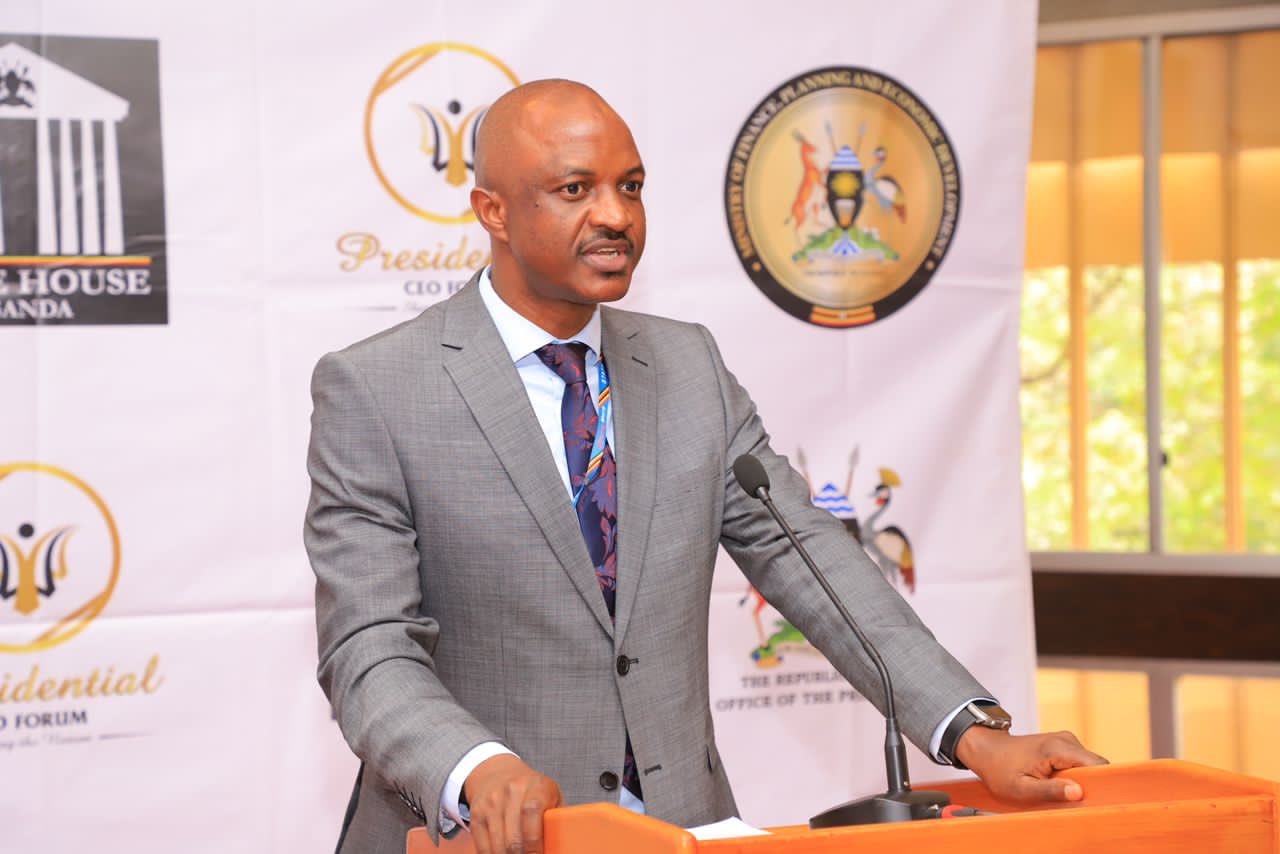
Permanent Secretary and Secretary to the Treasury Ramathan Ggoobi, acting as Finance Minister for this release, stressed two things: revenue mobilization and expenditure efficiency. The language is familiar, but the context has changed. With debt service obligations rising and external financing harder to get, Uganda can’t afford sloppy spending or tax leakage.
The message is clear: the state wants to spend better, collect more domestically, and avoid projects that don’t directly feed into productivity. That means tougher scrutiny of supplementary budgets, tighter procurement, and more pressure on MDAs to show results. For contractors and suppliers, payment delays may persist unless cash flow improves. For taxpayers, expect more effort on broadening the tax base rather than raising rates across the board.
Risks Hiding in Plain Sight
The update is optimistic, but three risks haven’t gone away. First, global conditions remain volatile. A spike in oil prices or a slowdown in major export markets would hit both inflation and the current account. Second, domestic revenue still lags behind spending needs. Without sustained URA reforms and digital tax administration, the gap stays. Third, implementation remains the weak link. Uganda has no shortage of plans. The gap is between plan and parish.
The Parish Development Model is supposed to close that gap, but it needs better targeting, faster disbursement, and stronger local oversight. If PDM money gets stuck in bureaucracy or diverted, the 6.6% projection will look good on paper and feel weak on the ground.
What to Watch Next
Three things will tell you if this update is more than a compliance document.
One, watch the mid-year budget review. That’s where revenue shortfalls and reallocation show up.
Two, track export numbers in coffee, dairy, and minerals. Those sectors drive the current account improvement.
Three, follow PDM disbursement and recovery rates at the parish level. That’s where the Ten-Fold Growth Strategy either becomes real or stays a slide deck.
The successful conclusion of the elections gives government a political window to push through unpopular but necessary reforms. No one wants to raise taxes or cut programs right after an election. But waiting too long means the fiscal space closes, and debt becomes the only option.
Bottom Line
Uganda enters the post-election period with a stable macro picture and a growth projection that’s credible if the external environment holds. The policy focus on ATMS and PDM is the right direction. The challenge is execution.
For the elite, this is a moment to push for efficiency and transparency in public spending. For the ordinary Ugandan, it’s a moment to watch whether parish-level money actually reaches the ground and whether market prices reflect the low inflation numbers in the report.
Stability buys time. What happens in the next 12 months will decide if that time is used to build a bigger, more inclusive economy.