
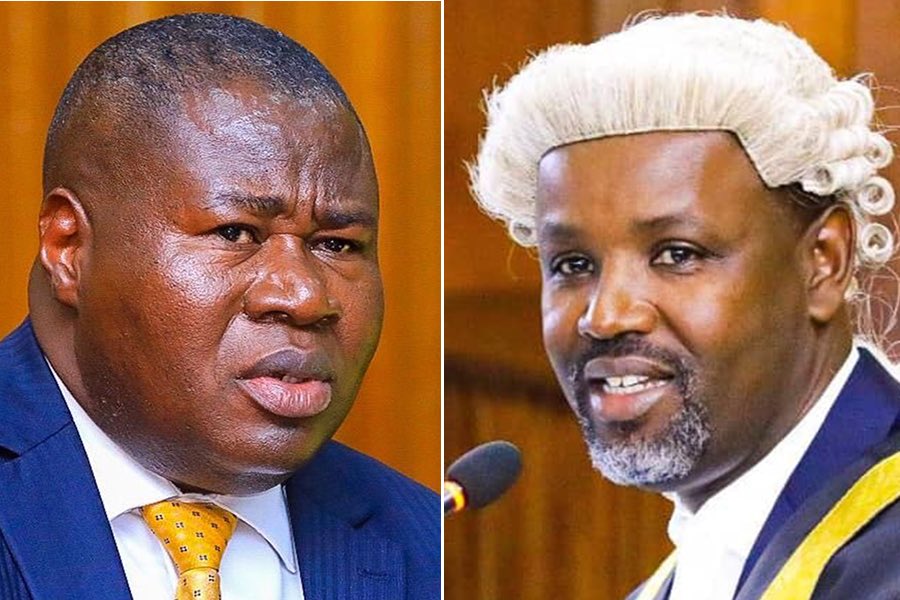
When the NRM Central Executive Committee met at State House Entebbe on Sunday, the message was clear: the party wants a Parliament it can run without surprises. By endorsing West Budama Central MP Jacob Oboth Oboth for Speaker and Ruhinda North MP Thomas Tayebwa for Deputy Speaker, the CEC has set up a leadership pairing that balances legal grounding with political mobilization.
This isn’t just a reshuffle of names. It’s a signal about how the ruling party intends to manage its parliamentary business for the next term.
Oboth Oboth: Law First, Loyalty Second
The CEC’s justification for Oboth Oboth comes down to two words repeated throughout the briefing: legal acumen and loyalty. According to NRM Secretary General Richard Todwong, Oboth’s command of parliamentary procedure makes him suited to interpret rules and keep proceedings within the law.
For an ordinary Ugandan watching from home, that matters. Parliament isn’t just a place for speeches. It’s where budgets are passed, bills are amended, and the rules of the game are decided. A Speaker who understands those rules reduces procedural chaos and limits the kind of walkouts and adjournments that have stalled business before.
For the elite within the party, Oboth also represents something else: a safe pair of hands. He’s described as uniting and uncontroversial. In NRM’s internal politics, that’s not a small thing. After years of speakership races that turned into proxy battles between factions, a candidate without a strong enemy list reduces friction heading into the caucus vote.
Tayebwa: Keeping the Precedent, Reading the Room
The endorsement of Thomas Tayebwa for a second term as Deputy Speaker follows an unwritten rule that has held since the days of Jacob Oulanyah and Anita Among: the deputy gets two terms. The CEC framed it as preserving precedent, but the political logic runs deeper.
Tayebwa brings youthfulness and mobilisation skills. That combination matters for a party that still relies on its grassroots structures to deliver votes and manage local disputes. A Deputy Speaker who can move between the chamber and the countryside keeps the party’s ear to the ground without relying solely on the Secretariat.
It also gives NRM a leadership team with complementary strengths. Oboth handles the gavel and the rulebook. Tayebwa handles the politics outside the chamber. For the average MP, that means fewer deadlocks and a clearer line of communication with State House.
The Stepping Down: Consolidation, Not Coercion
All other NRM aspirants for the two positions have stepped down. On the surface, that looks like discipline. In practice, it’s consolidation.
Parliamentary races within NRM have historically split the caucus, created long-term grudges, and weakened the party’s negotiating position once the House opens. By having the CEC settle the matter early and secure withdrawals, the party avoids a messy public contest and presents a united front to the opposition and the public.
For ordinary Ugandans, the practical outcome is simpler: less drama in the media and a faster start to parliamentary business. For the elite, it’s a reminder that the CEC still holds the final say on who gets to lead key institutions.
What This Means for the Next Parliament
If the caucus follows the CEC’s guidance, Parliament will open with a leadership team that prioritizes procedure and party cohesion. That could translate into smoother passage of government business and fewer procedural clashes. It also means the Speaker’s office will likely avoid becoming a flashpoint for intra-party conflict.
But there’s a trade-off. A leadership chosen for loyalty and continuity tends to be less confrontational with the Executive. Critics will argue that weakens Parliament’s oversight role. Supporters will say it prevents gridlock and keeps government programs moving.
The real test will come in how Oboth and Tayebwa manage dissenting voices inside the caucus and outside it. A Speaker who can enforce rules without stifling debate will earn respect. A Deputy Speaker who can mobilize without sidelining newer MPs will strengthen the party’s bench.
Bottom Line
The CEC’s decision is less about personalities and more about managing risk. Oboth Oboth offers legal order. Tayebwa offers political reach. Together, they give NRM a leadership structure designed to avoid the internal fights that have derailed previous terms.
For Uganda’s Parliament, that could mean fewer headlines about procedural fights and more about legislation. Whether that’s good for democracy depends on how much space the new leadership leaves for genuine contestation once the House sits.